
By leaves we live
- on volunteering with The Future Library Project

[An extract of this article was published by The Observer on 19 July in a books-themed edition of In Real Life]
Once upon a time in 2014, not long ago in ecological terms - a Scottish artist, Katie Paterson, planted the seeds of a collaboration that would reimagine our relationship to words, to nature, and to one another. Everything, then.
The Future Library Project in Oslo is the resulting century-long time capsule curated by urban planner and cultural producer Anne Beate Hovind. Each year, a different author is invited to contribute a sealed manuscript of a story, which will remain unread until the collective anthology is revealed in 2114. Stories in-waiting already include works by Margaret Atwood, Karl Ove Knausgaard, David Mitchell, Han Kang and Elif Shafak.
On a midsummer morning, we are gathered in a Norwegian wood to witness the making of vows between the 2024 and 2025 authors - Tommy Orange and Amitav Ghosh - and the trees that will, in 87 years’ of tree rings, become books. Books that most of us in the congregation of two to three hundred, except perhaps the babies and toddlers carried atop shoulders, will never read. Spread out upon a carpet of blaeberry and sphagnum moss are writers, musicians, foresters and, like me, timecapsule enthusiasts.
Earlier, in the forever after dawn of Nordic summer, I had joined a dozen other volunteers responding to a social media call to assist with ceremony preparations. We boarded the subway train from central Oslo to Nordmarka, a forty-five minute ride that ascends through a landscape of fjords and timber-clad grand designs. Among us were an Edinburgh schoolgirl researching her dissertation, an anthropology student from London with a hammock slung across her shoulder, a Swiss mother on her first solo-outing postpartum and a German engineer. Several of us, the parents of young children and so in active service of tending to the future. Some return year on year as though a pilgrimage, joining a growing network of forest guardians. All of us wanting to be part of something bigger than ourselves.
As one American volunteer put it: “we need this radical act of hope ’.
Dripping with expectation, such hope could wilt and wither on the metaphorical branch, were it not in careful hands. The gentle sincerity and commitment of the project founders ensures that this doesn’t happen.
In the UK, cultural volunteering is on an upward trend. From taking part in the opening ceremonies of large sporting events like The Glasgow Commonwealth Games, to community tree-planting in my family village, evidence shows the additional wellbeing benefits of participation when done with others. As well as lessening isolation and boosting a sense of belonging, it provides transferable skills.
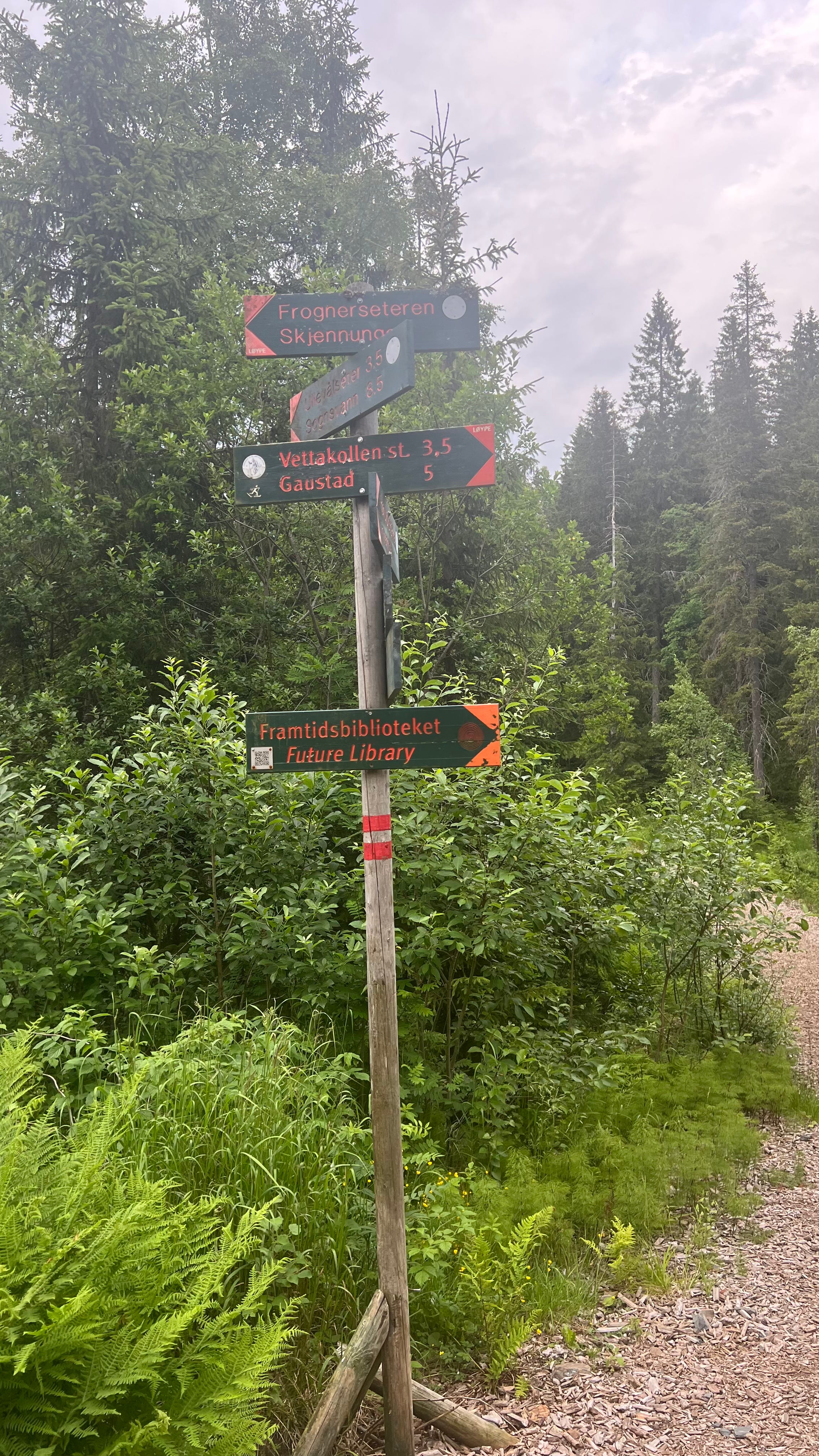
My forest skills included dispensing black coffee and cinnamon buns and laying sawdust wayfinders along the trail - which Tommy Orange’s four-year-old delighted in sweeping away.
As we proceeded in one another’s footsteps, along paths fringed with cow parsley, oxeye and buttercup, the leaves on the surrounding aspen trees trembled like, well, pages torn from a book. Sun rays from the European heatwave beat down hard while midges feasted upon exposed limbs. And then, after a morning fuelled by many coffees, I felt the call of nature. An alfresco wee in a quiet thicket (narrowly dodging a troupe of Sunday morning joggers) provided an inelegant, down to earth pause in which I could finally see the wood for the trees.
I saw a project designed to outlive human timespan but everyone reaching for camera phones to put themselves into the narrative frame. Likely some fir cones stashed in pockets too, because we can’t help but want more of it, time. However, a forest is a delicate ecosystem and far greater numbers of participants year on year risks harm. Therefore, the organisers know that the setup logistics won’t appeal to everyone and also livestream the event.
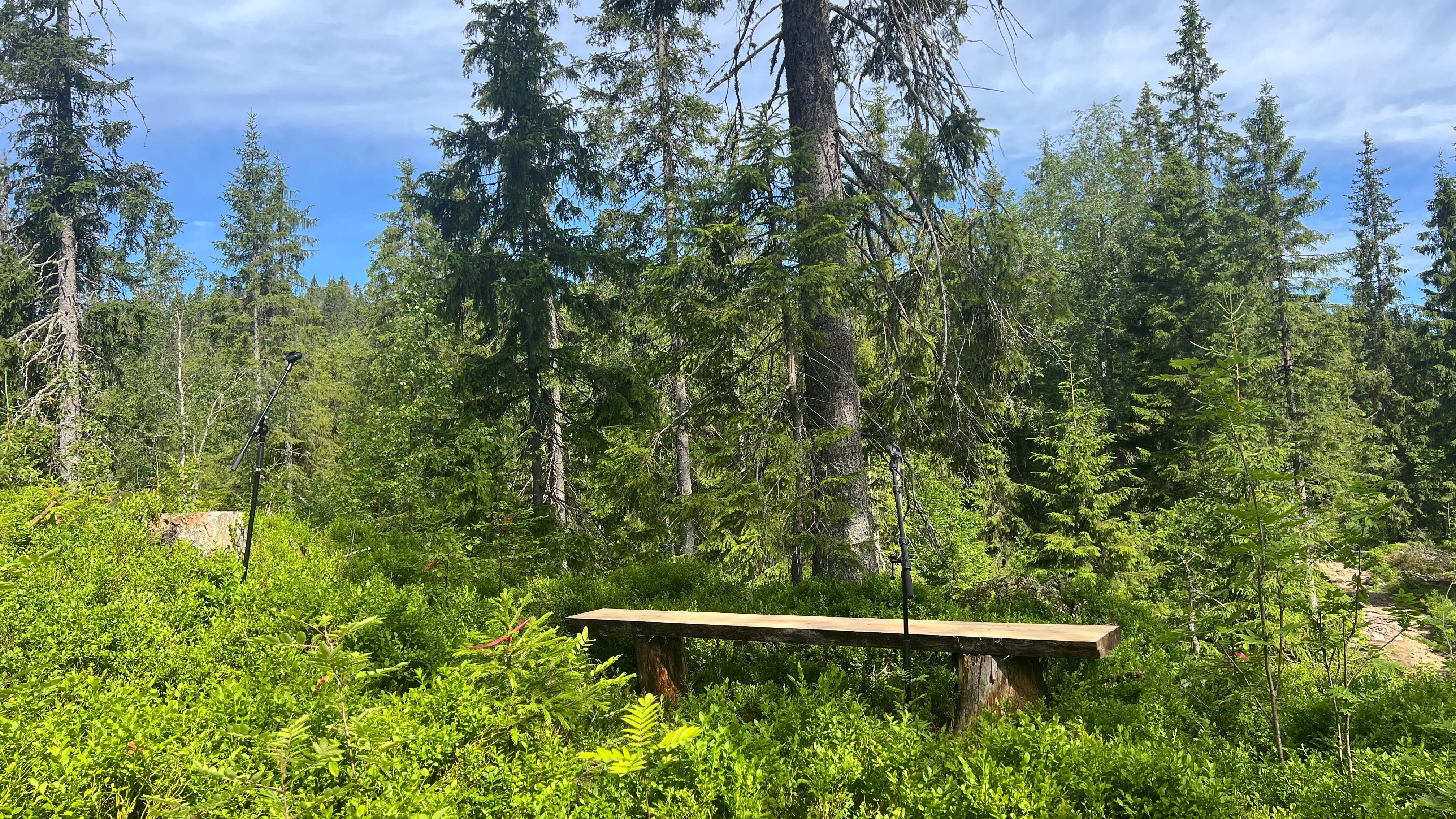
Now in its twelfth year, the project’s first trees have reached gangly adolescence. Some are so tall that this year’s ceremonial bench had to be moved to a new clearing in order that we might observe without getting jabbed in the eye by a spiky spruce, or accidentally trample a toddler-height pine. A privilege of setting out early means that I get to rest my storied body against a felled stump, likely of one of those trees that made The Silent Room, the vault within Oslo’s waterside Deichman Library that houses the sealed manuscripts.
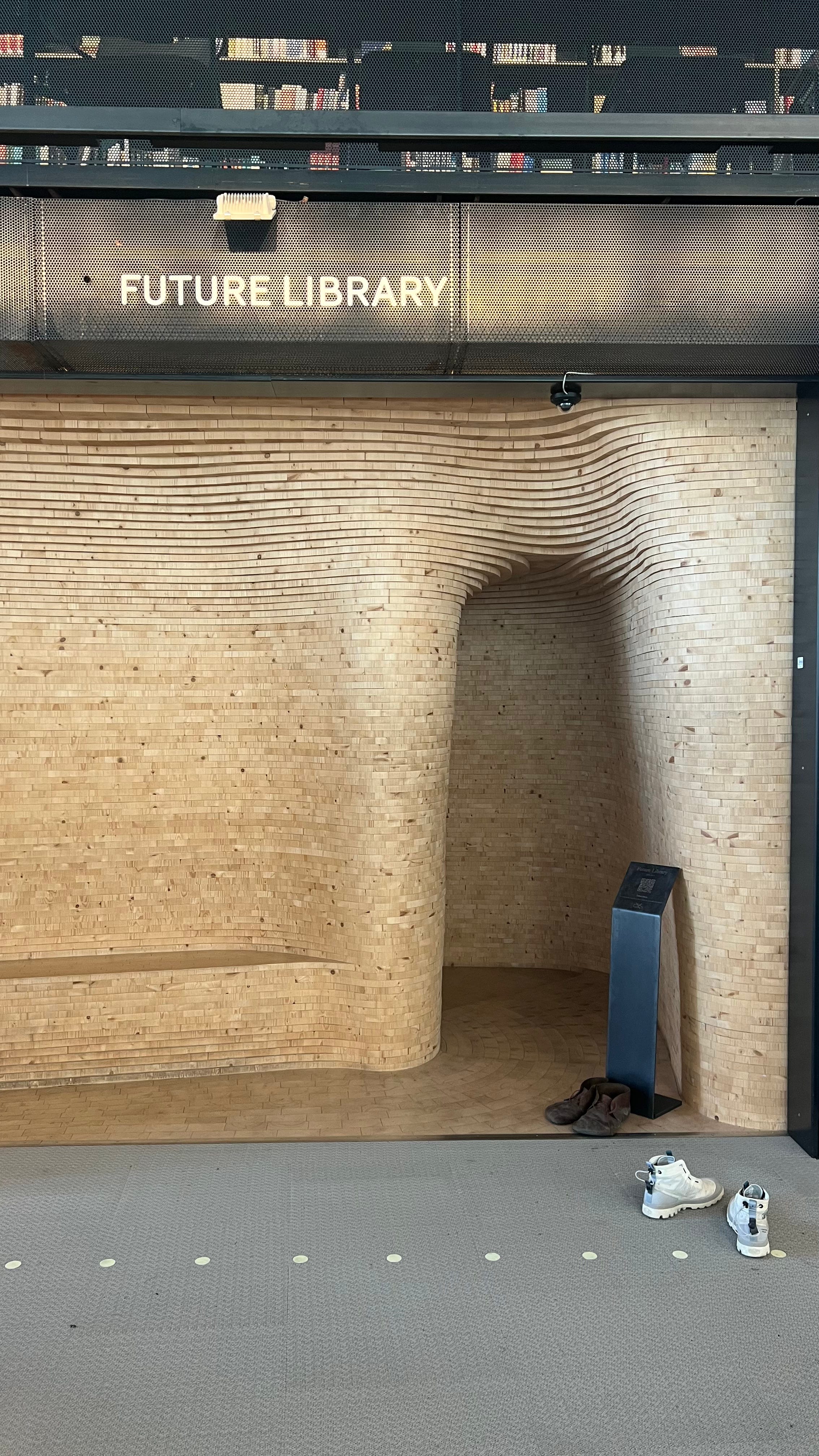
Later in the day, as chapter two of the Handover Ceremony unfolds within the library building, I notice the tangle of sandals and boots, removed by guests in reverence or familiarity, as though on the threshold of a good party or wake. The feeling is one of a timeless, domestic intimacy and I am reminded of Maes Howe, the Neolithic burial cairn and passageway in Orkney that is illuminated by a shaft of light in midwinter. Stone Age Orkney, too, because of the runic graffiti made by crusading Vikings many centuries after the chamber was constructed. These crude inscriptions have been translated by historians into different versions of I was here. And so, I wonder about the challenge of sustaining local stewardship for The Future Library Project in the years to come and how interventionist present, and future, curators will want to be in the event of any uninvited mark-making on the trees and vault walls.
Back in the here and now of The Handover Ceremony in the forest, I am entranced by the sound of the traditional singing of the Sámi people - called yoiking - reverberating with tuba-playing and birdsong. The lead forester, who I had chatted to as he stirred a kettle with rowan twigs, takes a ceremonial role. He gives an update on the forest’s progress over the past year. Like a headteacher at the end of term, he praises the progress of young saplings but warns about moose nibbling fresh shoots. And the biggest moose in the room, climate change.
The titles of the new, sealed works by Tommy Orange and Amitav Ghosh are read aloud, Orange speaking in his native Cheyenne before passing the mic to his teenage son, Felix, who implores there to be more kindness in the world. More young men like Felix in the world, I hope.
And just like that, I become one of the faithful. By leaves we live, said Patrick Geddes, a Scottish conceptual artist from a century past. If this is collective worship at the altar of Mother Nature, I’m into it (and have a volunteering tshirt to prove it).
The Future Library Project will be at The Edinburgh International Book Festival on 29 August with Anne Beate Hovind, Katie Paterson, and former contributors Elif Shafak and Valeria Luiselli, to announce the author chosen for 2027. Get tickets here: https://www.edbookfest.co.uk/events/future-library